


by Daniel Katz
As this most recent World Series wraps up with the Milwaukee Brewers winning their first title in franchise history, I am reminded of how baseball is a game that never lets its stories truly end. They are very much alive, and I have heard countless stories about the unique players and events that have permeated professional baseball since its inception. The one story that I connected with most personally was Hank Greenberg sitting out of a pennant game because it fell on Yom Kippur. As the only openly Jewish kid in my school growing up, who also had to miss events that fell on Yom Kippur, I held an admiration for Hank Greenberg in a way that only a young kid who adored a star baseball player could.
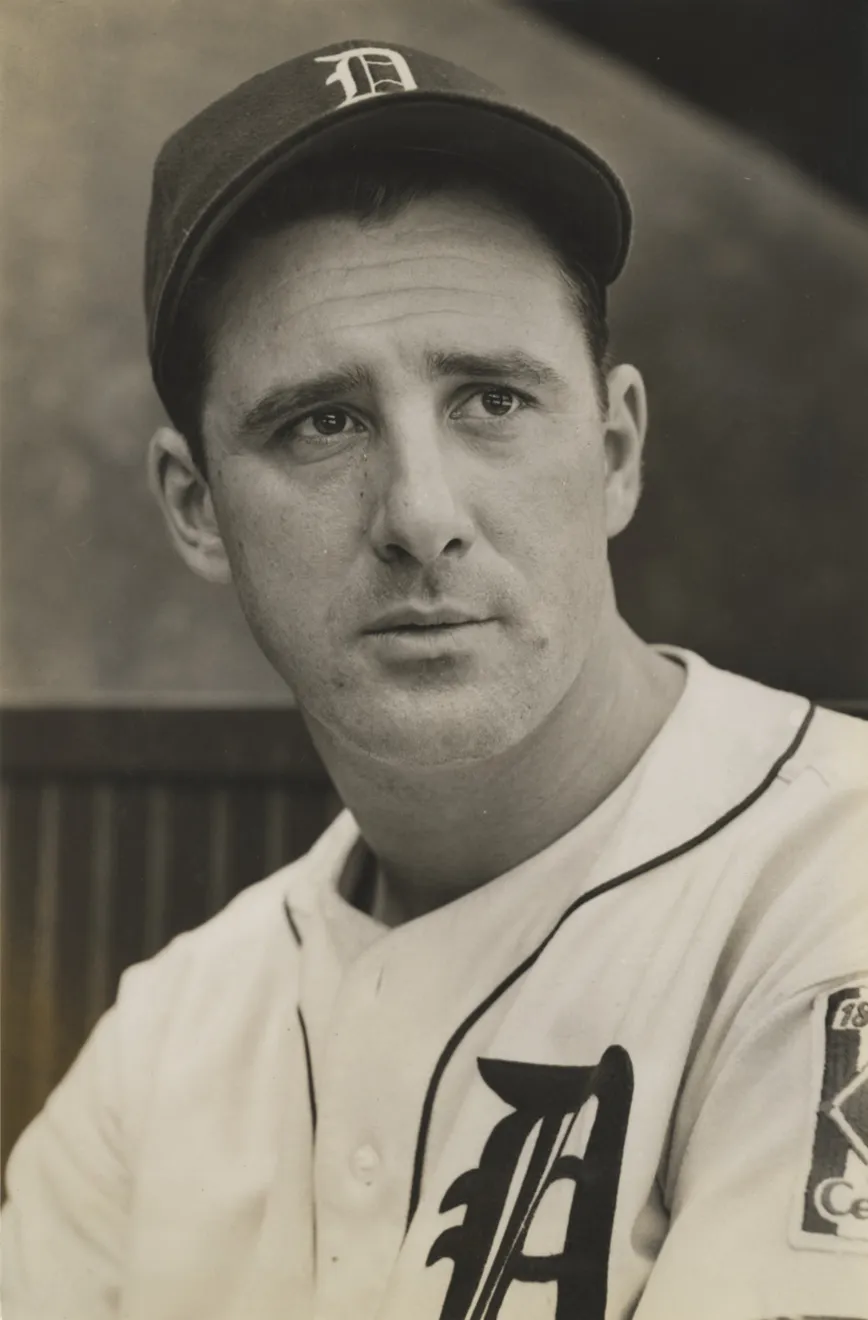
But Hank Greenberg was far more than an observant Jew who refused to play on a High Holy Day. In fact, he was not a very religious Jew at all. Early in his career, he was a very secular man who described resenting the fact that he was the only Jew in the locker room. When he made his baseball debut in 1930, some of the players would openly stare at him as he was the first Jew they had ever seen, and one of his teammates even remarked that they were surprised that he didn’t have horns because he thought that all Jews had them. Greenberg did not want attention to be on the fact that he was Jewish, but wanted people to recognize him for being a great ballplayer. And he was, in fact, a great ballplayer.
However, being a fantastic baseball player was not enough to save him from the scourge of antisemitism he faced throughout his career, with much of the hate coming from his own team’s fans. Greenberg played for the Detroit Tigers in the 1930s and 1940s, an era in which Detroit was the epicenter of antisemitism in the United States. Detroit was home to infamous antisemites such as Henry Ford and Charles Coughlin and was influenced by the rise of fascism in Europe at the time.
Henry Ford owned the Dearborn Independent, a newspaper that regurgitated conspiracies from The Protocols of the Elders of Zion, a proven fabricated antisemitic text, and some of Ford’s own conspiracy theories. For example, Ford claimed there was “too much Jew” in baseball… in 1920 when the only players of Jewish origins were in the Negro Leagues. Charles Coughlin was an influential antisemite who impacted not only Detroit but also much of America at the time. Coughlin was a priest who ran a radio show that brought in an average of 30 million listeners, a quarter of the population of America at the time. He also ran a magazine called… Social Justice (no you cannot make this up) and used “social justice” as an avenue to continue his antisemitic attacks. He also founded a union called America First. It’s ironic that these terms are still being used today as a way to legitimize antisemitism.
With all the antisemitic influence in the area, Greenberg was often hurled with verbal abuse and slurs during the game, from opposing and home fans alike. But this abuse fundamentally changed something in Greenberg, he decided to confront opposing players who said these things (and was often successful as he rose above 6’4”) and decided to openly embrace his Jewish identity. He also was one of the few opposing players to welcome Jackie Robinson to the league. Confronting bigotry and embracing his place in the league as the Jewish player culminated in the famous decision he took to sit out a playoff game on Yom Kippur and come full circle with his Jewish identity. This is the decision that influenced millions of Jewish Americans, who finally had the chance to see someone like them playing in the big leagues, and future Jewish ball players like Sandy Koufax, who also sat out a World Series game on Yom Kippur.
Greenberg would continue to attack antisemitism by enlisting in the army during World War II, during what many consider to be the prime of a baseball player’s career. But Greenberg was more than a great player at that point, he was a great Jew. In his own words, “When I was playing, I used to resent being singled out as a Jewish ballplayer. I wanted to be known as a great ballplayer, period. I’m not sure why or when I changed, because I’m still not a particularly religious person. Lately, though, I find myself wanting to be remembered not only as a great ballplayer, but even more as a great Jewish ballplayer.”
Daniel is the Director of Distribution at Chai Mitzvah. He graduated with a BA in Communications at UConn and recently graduated with a MS in Cybersecurity from Quinnipiac in 2026. He is active in Jewish organizations in the Greater Hartford area and is an avid sports fan.
West Hartford, CT
860.206.8363
info@chaimitzvah.org


Copyright © 2026 Chai Mitzvah. All rights reserved. Website designed by Addicott Web.
A movie on The Life and Times of Hank Greenberg was done by Aviva Kempner and was screened in various eductional and non educational venues.
Thank you for this interesting information!
Cool!
Thank you for information that I did not know.
Beautifully written, Daniel
Nice job. I hope to see a series on Jewish athletes.
So well written and very inspiring ❤️