

by Audrey Lichter
Coming away from the General Assembly, the annual conference hosted by the Jewish Federations of North America, I found myself thinking about the many challenges facing the Jewish community, Israel, and the broader world. There were certainly reasons for concern, but also reasons for optimism. More than anything, the conversations reinforced how important it is for us to think differently, remain engaged, and take responsibility for the future of our community.
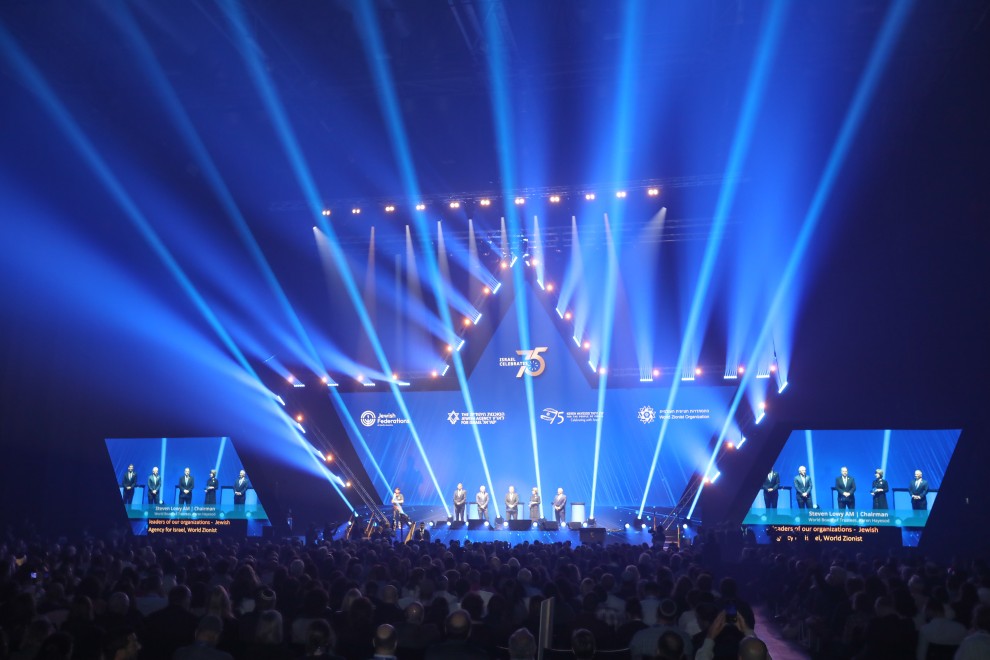 Photo: Nimrod Gluckman
1. The War with Iran Is About More Than Israel
One of the most compelling themes was the idea that the war with Iran is not simply about Israel’s security. It is also about the future of Western civilization and the values that underpin the democratic world. The implications extend far beyond the Middle East. This is a moment that calls for a broader understanding of what is at stake and why the outcome matters to all of us.
2. Israel Needs Our Emotional Support
We talk a great deal about Israel’s military, political, and economic challenges. But we should not underestimate the emotional toll that the past several years have taken on Israeli society. There is enormous trauma, anxiety, grief, and exhaustion.
Israel is a country in need of substantial emotional support. Beyond political statements and expressions of solidarity, we need to recognize the human consequences of living through prolonged war and uncertainty. Our relationship with Israel must include listening, empathy, and a willingness to be there for its people.
3. American Politics: Concern, But Not Panic
There was considerable discussion about recent Democratic electoral victories and what they might mean for the U.S.-Israel relationship. The encouraging takeaway is that many of the individuals elected remain supportive of Israel.
That does not mean the relationship will remain unchanged. We should expect differences, difficult conversations, and perhaps a shift in tone and policy. But at this point, I would not characterize the situation as a three-alarm fire. We need to pay attention, build relationships, and continue making the case for a strong U.S.-Israel relationship without assuming the worst.
4. Antisemitism Is Growing, and We Need to Take It Seriously
There is no question that antisemitism is on the rise, and the consequences are dangerous. The discussions surrounding the Breaking Through report which uses behavioral science to underscore the need to understand the changing nature of antisemitism and develop more effective responses.
We also need to recognize the challenges facing Jews in Hollywood and other cultural institutions. There are real professional and social pressures, and too many people feel that speaking openly about Jewish identity or Israel comes with a price.
One practical observation that emerged was the importance of being thoughtful about social media. Not every provocation deserves a response, and sometimes staying off social media is the healthiest and wisest choice. We need to distinguish between meaningful engagement and getting pulled into an environment that often rewards anger rather than understanding.
5. Qatar, Al Jazeera, and the Long-Term Investment in Education
Another important concern is Qatar’s long-term strategy and its investment in shaping public opinion. The discussion raised questions about a 100-year vision, with significant money being invested in education, including K-12 programs.
We need to pay much closer attention to what is being taught, who is funding educational initiatives, and what messages are reaching the next generation. This is not simply a media issue involving Al Jazeera. It is an issue of influence, education, transparency, and accountability.
If we believe education shapes the future, then we must pay attention to the institutions and ideas shaping the education of young people around the world.
6. The Jewish Community Is Aging. We Need New Models.
One of the most important challenges facing our own community is demographic. The Jewish population is aging, and the traditional models of Jewish engagement may not be sufficient to reach the next generation.
We need to think creatively about how people connect to Jewish life, community, and one another. Not everyone will join a synagogue, attend traditional programs, or engage through established institutions. We need new approaches that meet people where they are.
The example of Opus in Boston, and the work of Amy Schechman, offered an interesting model worth exploring. We should be looking at innovative approaches that create community, foster relationships, and provide meaningful Jewish experiences in ways that reflect how people live today.
The question is not whether our traditional institutions have value. They certainly do. The question is whether we are creating enough new pathways for Jewish participation and belonging.
7. The Federation Matters More Than Ever
Finally, it is important to acknowledge the extraordinary work being done by our Federation. At a time when the needs are so great, Federation continues to play an essential role in supporting Israel, strengthening Jewish communities, addressing antisemitism, and sustaining Jewish life.
We sometimes take this work for granted. We shouldn’t. Federation needs our engagement, our advocacy, and our financial support.
My biggest takeaway from the GA is that we are living through a period of significant change. The challenges are real: Israel’s trauma, rising antisemitism, shifting political alliances, competing international influences, and an aging Jewish population.
But challenges also create opportunities. We need to be more creative, more strategic, and more willing to question whether the models we have relied upon are still working.
Most importantly, we cannot afford to be passive observers. The future of Jewish life will depend on our willingness to engage, support one another, invest in the next generation, and build the institutions and relationships that will carry us forward.
There is much to be concerned about, but there is also much worth fighting for.
AudreyLichter is the founding Executive Director of Chai Mitzvah, which was launched in 2009. She has been a professional Jewish educator for more than 30 years. Audrey is also the founding principal of Yachad, the award-winning community High School of Greater Hartford. As a lay leader, Audrey has been the recipient of many community awards and has been very involved locally and nationally in the Day School movement.
West Hartford, CT
860.206.8363
info@chaimitzvah.org


Copyright © 2026 Chai Mitzvah. All rights reserved. Website designed by Addicott Web.
Leave a Reply